
Practical resources on the rules nonprofits operate under. Governance and fiduciary duties. Tax-exempt status and public-support tests. Lobbying and advocacy rules. Employment and volunteer compliance. Fiscal sponsorship.
Written for executive directors, board members, and senior leadership who want to understand the frameworks shaping their work.
The Nonprofit Law Primer.
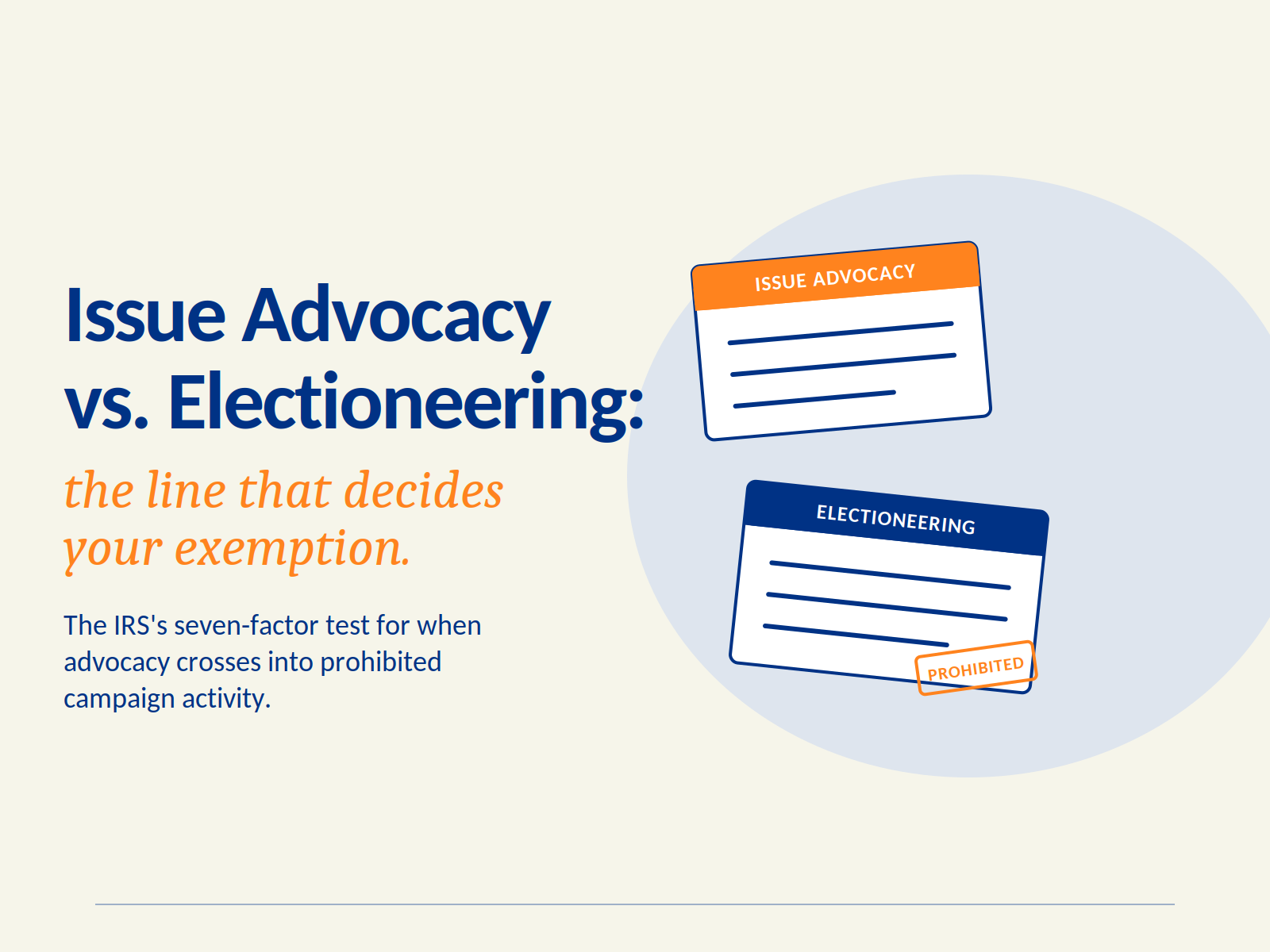
Issue Advocacy vs. Electioneering: How 501(c)(3)s Stay on the Right Side
Issue advocacy is protected under Section 501(c)(3); electioneering is not. Here is where the IRS draws the line — the seven factors that decide it, and what it costs an organization that crosses it without meaning to.
The Cost of Complacency: How Nonprofits Lose Their Tax-Exempt Status and How to Keep It
Tax exemption isn't permanent: three years of unfiled 990s triggers automatic revocation, and so do private inurement, excess political activity, and operations that drift from your stated exempt purpose, often before a board notices anything has changed.
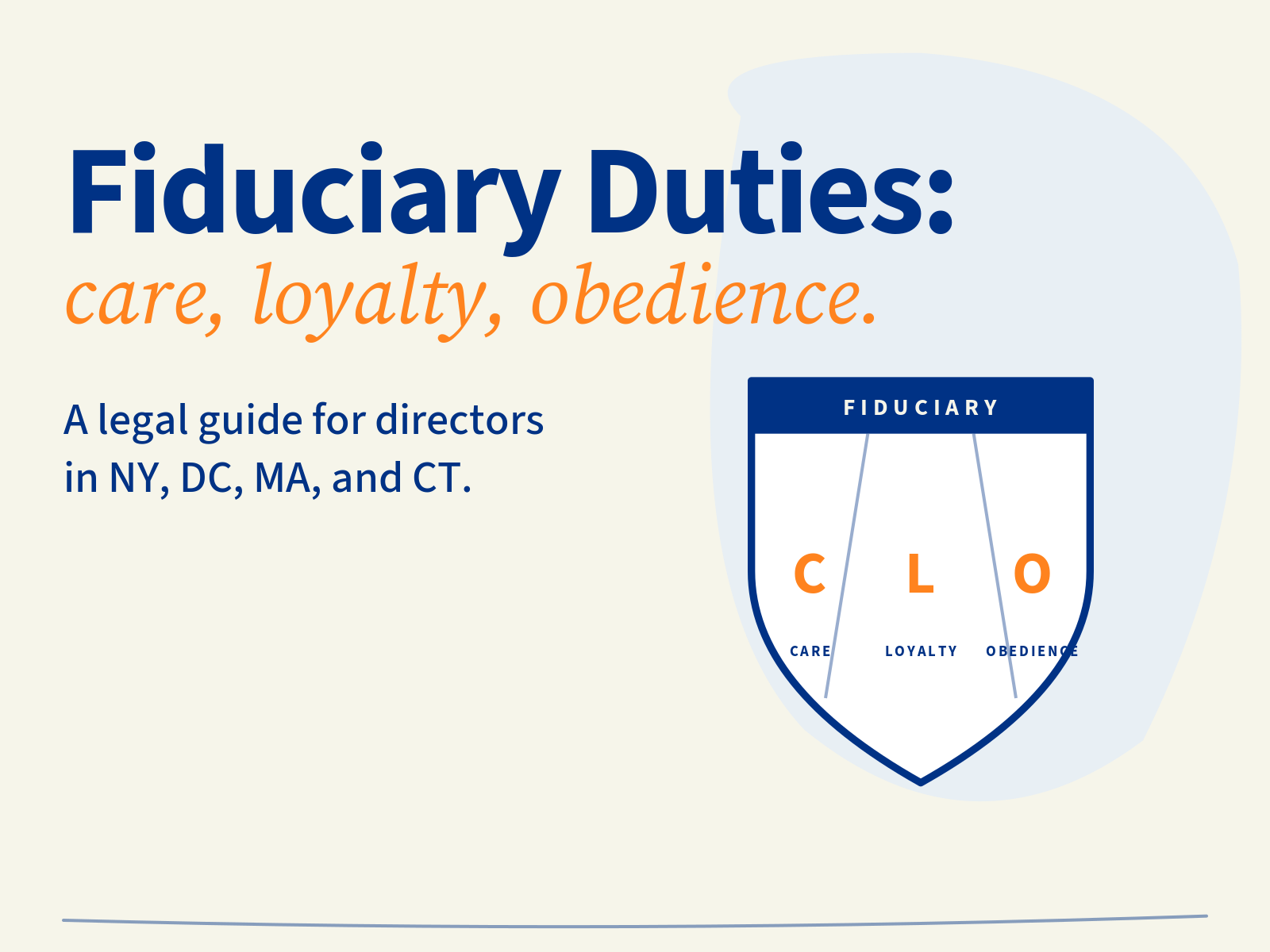
Nonprofit Board Fiduciary Duties: A legal guide for directors in MA, NY, CT & DC
Board members owe three legal duties (care, loyalty, and obedience), and while the federal framework is consistent, NY, DC, MA, and CT each define and enforce them differently, with state-specific case law that can leave a director personally exposed.
The Lobbying Rules Nonprofits Get Wrong — and the Power They're Leaving on the Table
Most 501(c)(3) leaders avoid lobbying entirely because they think the rules are restrictive, but the 501(h) election actually quantifies what's allowed, and the limits are higher than most boards realize, leaving real influence on the table.
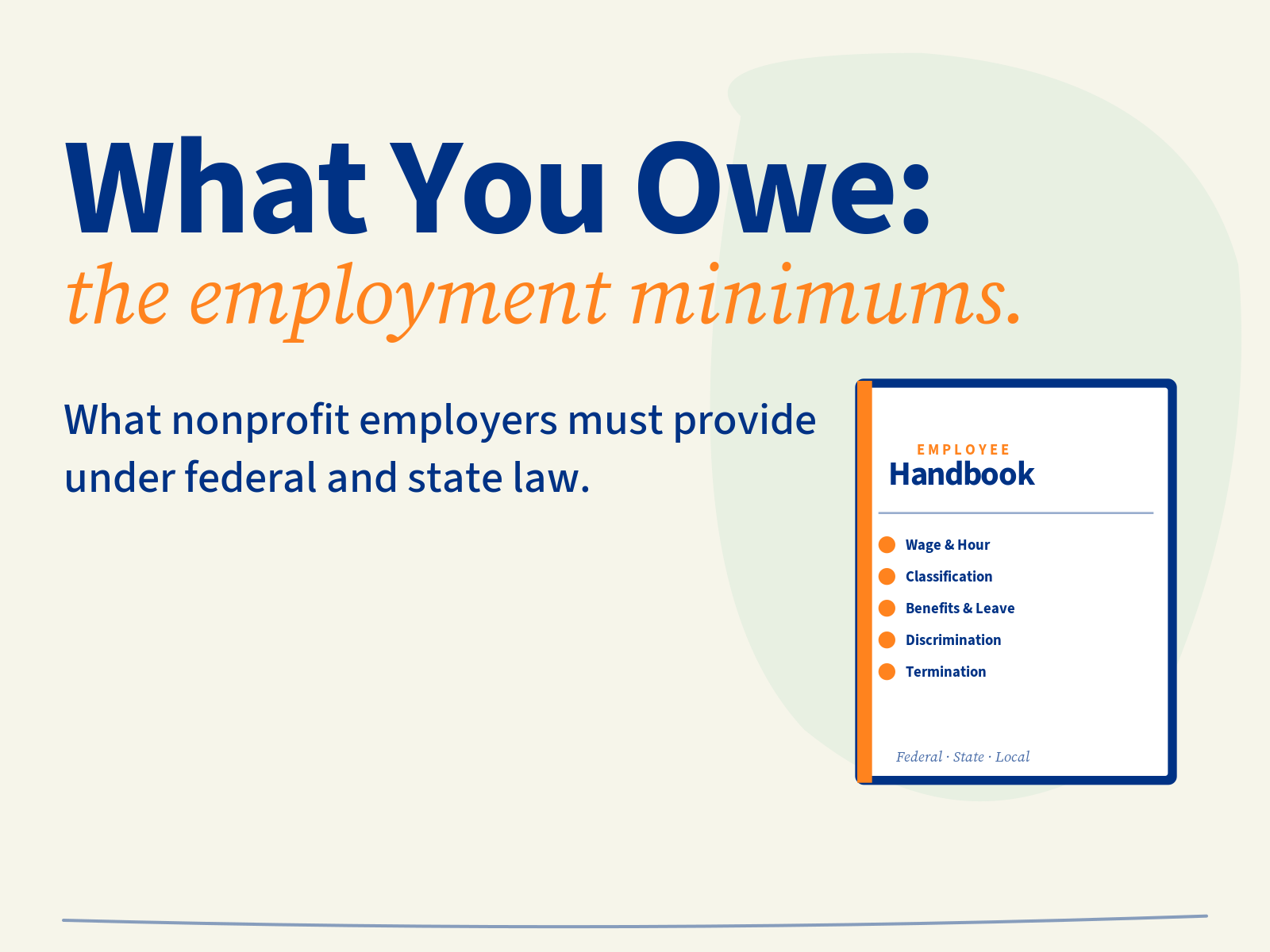
What Nonprofit Employers Owe Their Employees Under Federal and State Law
Nonprofit status doesn't exempt you from federal or state employment law, which means your wage-and-hour exposure, benefits obligations, and discrimination liabilities are the same as any for-profit employer's, even when you can't pay market rates.
What Effective Nonprofit Conflict of Interest Policies Look Like, and How to Enforce Them
Most nonprofit COI policies are drafted to satisfy the IRS Form 990 question and then ignored, which is exactly when they fail, because the moment a real conflict surfaces is the moment everyone realizes the policy doesn't say who has to recuse.
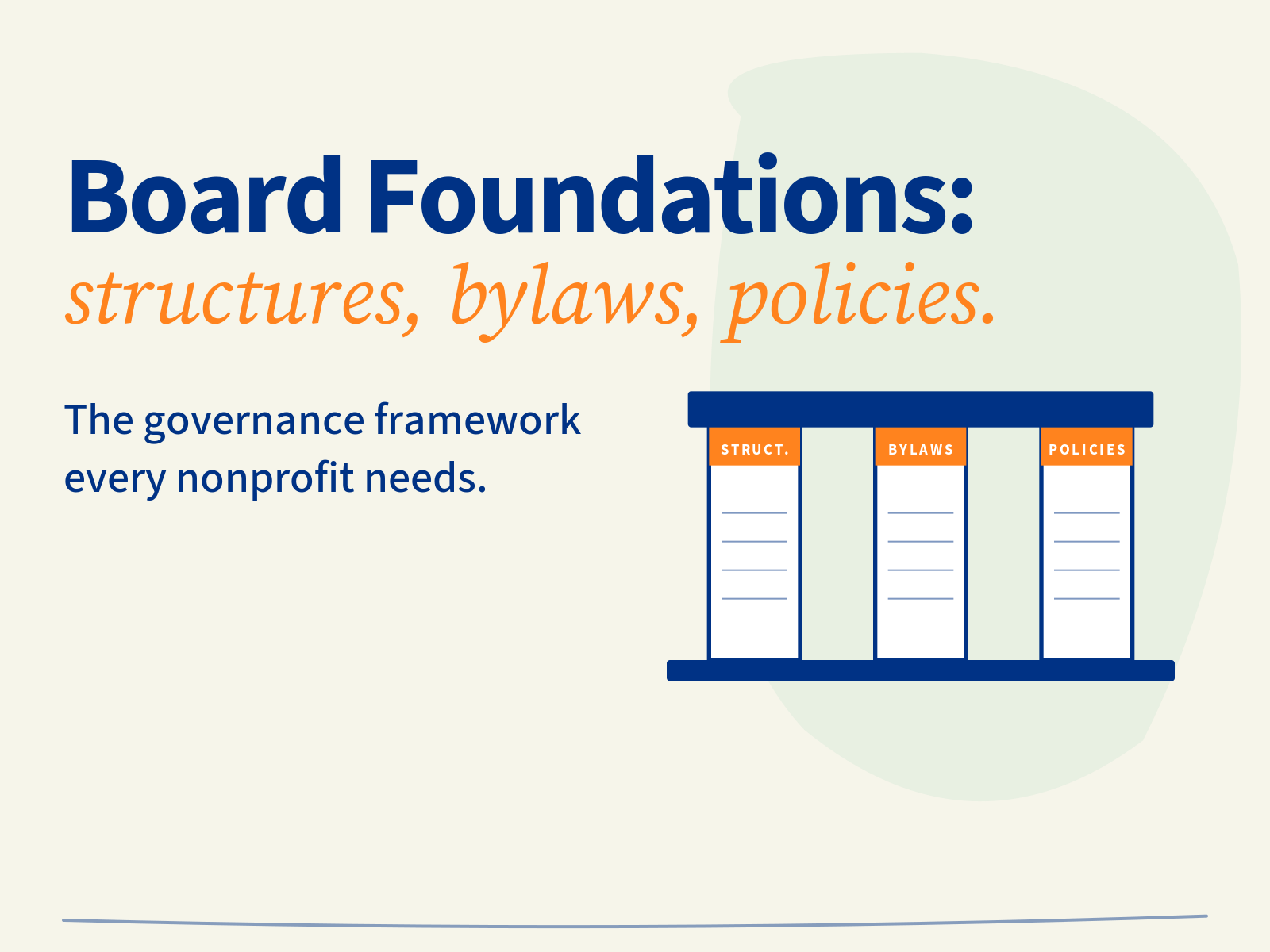
Board Structures, Bylaws, and Policies: The Governance Framework Every Nonprofit Needs
Bylaws aren't a one-time filing; they're the operating manual your board will reach for the day a chair resigns, a major donor demands accountability, or a regulator asks who has authority to do what.
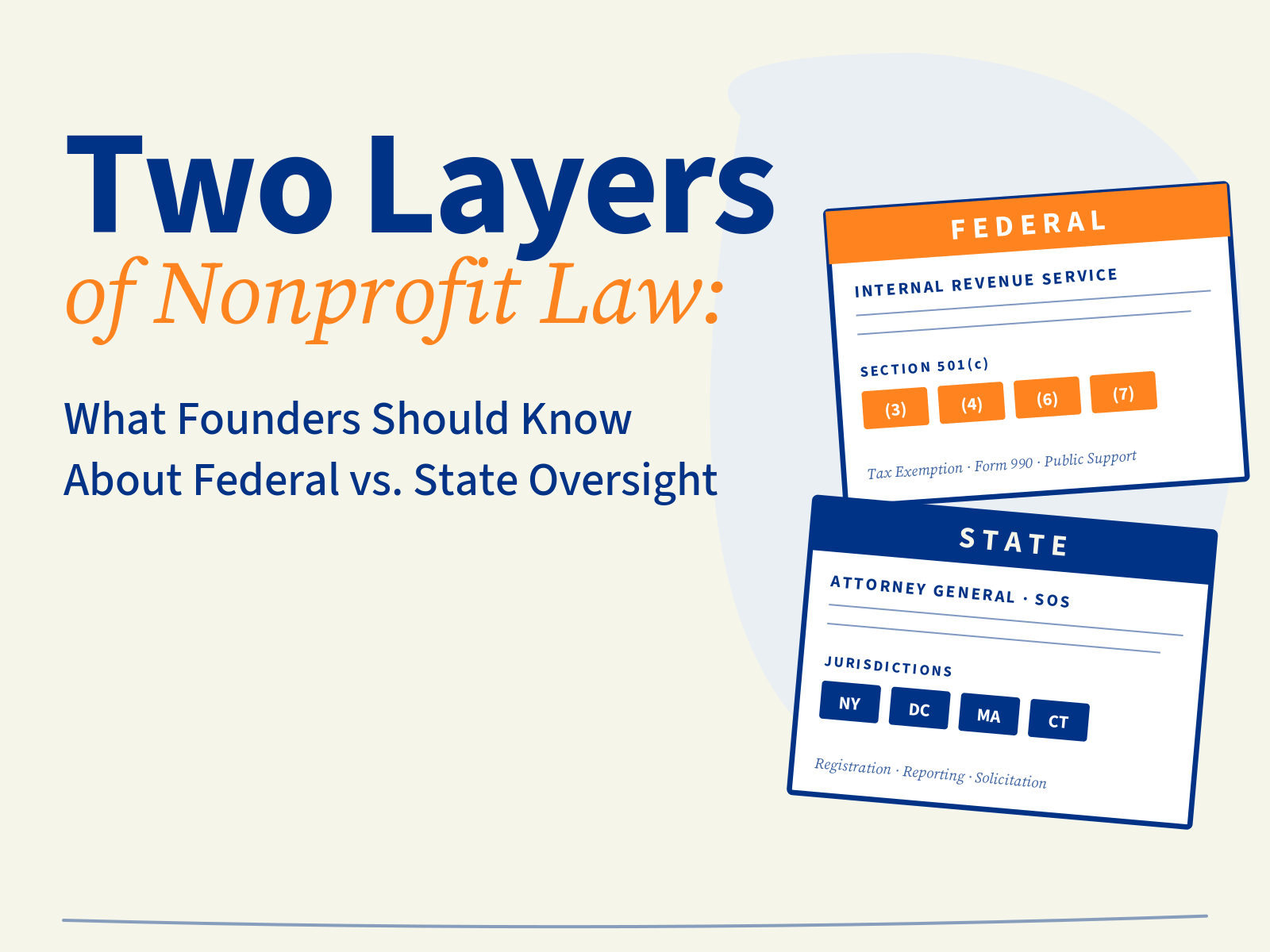
The Two Layers of Nonprofit Law: What Founders Should Know About Federal vs. State Oversight
Tax-exempt status is only half the picture: federal IRS rules and state nonprofit laws create distinct compliance regimes that sometimes conflict, and the cost of treating them as one stack falls hardest on the founders who didn't realize they had to file twice.

501(c)(3) vs. 501(c)(4) vs. 501(c)(6)
Most founders default to 501(c)(3) without realizing another subsection might better fit their advocacy ambitions, member-service model, or political reality, and here's how to pick the right one before you commit.
Three publications. One convenient monthly update.
Topical legal news from The Beacon. Resources from the Nonprofit Law Primer. Commonlight Legal news when it happens From the Hearth.
Ready to talk?
A complimentary 30-minute call with a managing partner. Clear scope.
Transparent fees. No primer required.